


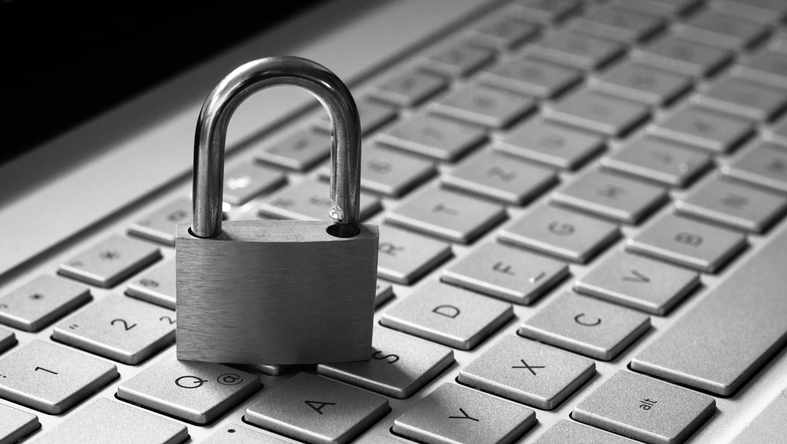
Today I'd like to touch on website encryption (SSL).
In fact, our websites are exposed to a great many attacks that we can't see, such as tampering and unauthorized access.
Almost every day the news reports that customer information has leaked from a web server, or that a site has been tampered with.
In many cases these involve major corporations. And so we tend to think of it as "something that only happens to big companies"… but is that really true?
Not at all! Regardless of company size, the risk of unauthorized access is exactly the same.
If anything, major corporations announce these incidents precisely because they follow compliance rules strictly. Conversely, I suspect that small and medium-sized businesses not only fail to announce them, but in many cases don't even notice that a leak has occurred.
So how should you protect against information leaks from your website? The most basic measure is "website encryption (SSL)."
What happens when you encrypt your website?
I'll skip the technical details of website encryption, but first let me introduce how to find out whether your own website is encrypted in the first place.
Display your website in a browser and look at the part where the address is shown.
The display differs slightly depending on the browser, but if the site is encrypted, a padlock icon appears before the address.
And in the case of Google Chrome, a message reading "Secure" is also displayed next to the padlock icon.


With an encrypted website, the personal information users enter in shopping carts or inquiry forms is no longer easily leaked.
In other words, prospective customers who visit your website can shop or make inquiries with peace of mind.
Conversely, unencrypted websites carry a higher risk of leaks, which can make customers uneasy.
In fact, when installing shopping cart programs on a website, there are now more and more that cannot be used unless the site is encrypted.
Google, the number one search engine, has also introduced mechanisms that give higher evaluations to encrypted websites as one of its ranking signals.
To summarize the benefits of encrypting your website:
* You can avoid the risk of information leaks and gain your customers' trust.
* It has the effect of improving your search rankings.
As for the effect on search rankings, it is said that the impact is not that large for now. That said, there is no doubt that Google places importance on the need for encryption, so I think there is a possibility that it will increase the weight of this factor in the future. Or perhaps it will move in the direction of lowering the evaluation of websites that are not encrypted.
Encrypting your website is easy!
So, can you encrypt an existing website?
Of course you can.
Roughly speaking, encryption is offered as an optional contract by the server hosting your website, so all you have to do is sign up for it.
Depending on how the website was built, you may need to rewrite a bit of the internal source code, but in that case it's quicker to ask your production company.
Costs vary widely on an annual basis, from a few thousand yen for cheap options to well over a hundred thousand yen for expensive ones.
So what's the difference in price? Well… there's hardly any.
The difference in the certificate authority is what makes the difference in price. For example, one of the most expensive certificate authorities is Symantec. Symantec is world-famous as the maker of the antivirus software "Norton."
That said, as I wrote earlier, being famous doesn't mean it's functionally superior.
In short, you can safely assume that an inexpensive option is quite sufficient.


