










What you can outsource in a subsidy application is choosing the right program, building the business plan, support with writing the application, and help with the performance report after approval. Deciding what your business will actually do, and taking responsibility for the content of the application, remain the applicant's own job. Fees are often a combination of an initial retainer and a success fee, and they vary widely from provider to provider.
What you can outsource is support with building the plan and preparing the documents
The scope of what you can outsource in a subsidy application falls broadly into four areas: selecting the program, building the business plan, support with writing the application, and help with the performance report after approval.
There are also parts that cannot be outsourced, or that remain with the business owner even if outsourced: deciding what the business will actually do, taking responsibility for the truthfulness of the application, and actually carrying out the project after approval. The application is read by reviewers as the business owner's own plan, so even if you outsource, you need to be able to explain its content in your own words.

The application process, and where you can get help
Here is the process, using the Small Business Sustainability Subsidy as an example. The details confirmed as of October 23, 2026 are based on the 8th edition of the application guidelines. Programs change from year to year, so please check the official page for the latest information before applying.
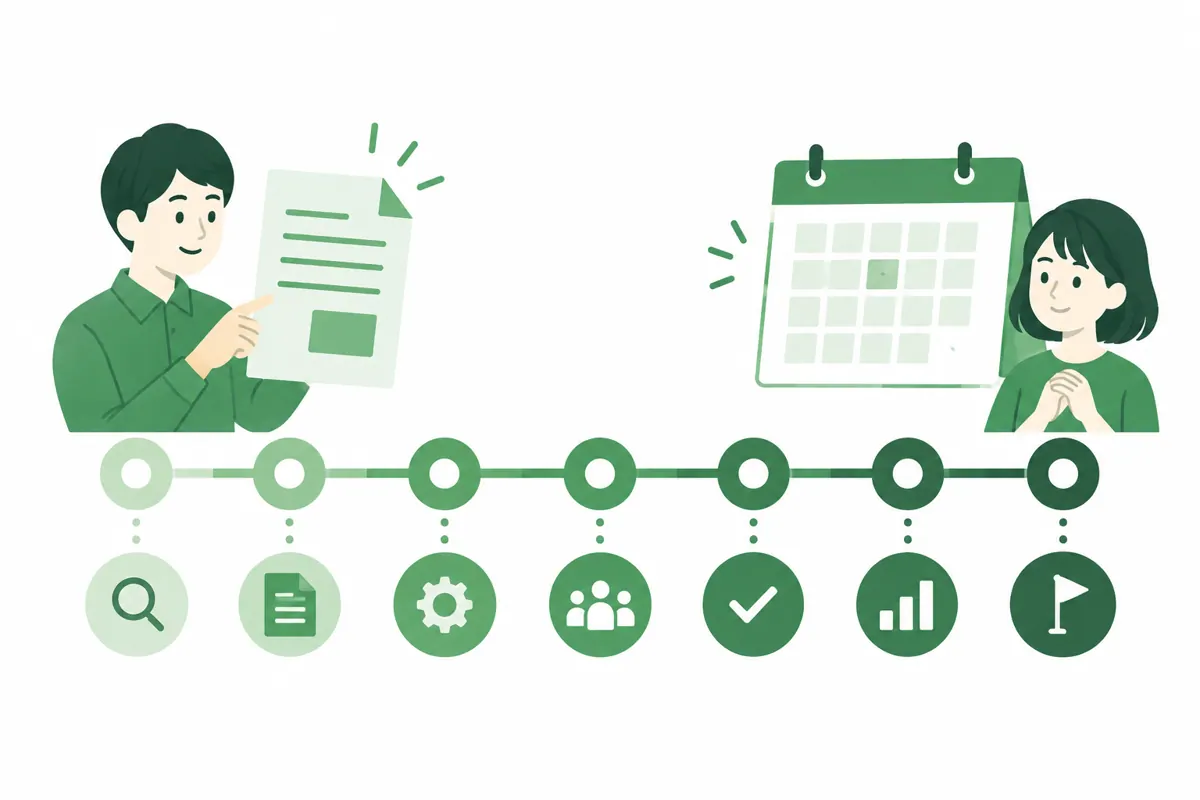
- Choose a program. Check whether it fits the purpose of your project.
- Build your business plan. Decide what you will do and why.
- Request issuance of a business support plan from your Chamber of Commerce and Industry or Society of Commerce and Industry. For the 20th round of the general type, the deadline for requesting issuance is December 4, 2026.
- Prepare the application and submit it electronically. The deadline for the 20th round is 17:00 on December 15, 2026.
- Wait for the screening results.
- Once approved, begin the project.
- Submit the performance report and receive the subsidy.
Most of the help you can get is concentrated in steps 1 through 4. The business support plan in step 3 is a procedure the business owner must request at the counter in person.
Fee structures for subsidy application services
Fees for application services are set differently by each provider. The main structures are as follows.
| Structure | Details | Points to watch |
|---|---|---|
| Retainer plus success fee | A set amount on engagement, plus an amount based on the subsidy if approved | The retainer is often non-refundable even if the application is rejected |
| Success fee only | You pay only if the application is approved | The rate may be set relatively high |
| Flat fee | A fixed amount for the application work | Check whether the scope covers only document preparation or also plan development |
| Free | Bundled with a contract for another service | Check what contract is required as a condition |
Whatever the structure, check that the quotation states which tasks are included and which are not. Whether support through the post-approval performance report is included changes the meaning of the fee.
What to check when choosing a provider
Asking the following questions before you engage a provider will reduce misunderstandings later.
- Does your support include the performance report after approval?
- What happens to the fees if the application is rejected?
- Can I review and revise the content of the application?
- Can you tell me in advance which expenses are eligible for the subsidy and which are not?
- How will you translate the details of my business into the plan?
The fifth question is especially important. If the plan does not match the reality of your business, you may run into trouble at the performance report stage even if you are approved. Choose a provider that puts what you will actually do at the center of the plan.
Points to watch, using the Small Business Sustainability Subsidy as an example
The Small Business Sustainability Subsidy is a subsidy that is easy to use for website production. The conditions we confirmed are as follows.
- For the general type, standard frame, the subsidy rate is two-thirds, and the cap is 500,000 yen plus any special allowances
- Website-related costs cannot be claimed on their own. The cap relative to the grant application amount is 300,000 yen (tax included)
- A site costing 500,000 yen (excluding tax) or more becomes an asset subject to disposal restrictions for five years in principle
- Websites not in operation within the project period are not eligible
- Consulting fees are not eligible
In addition, the official FAQ for the Digitalization and AI Adoption Subsidy 2026 (formerly the IT Introduction Subsidy) states that website production is not eligible. If you see a claim that “you can build a website with the IT Introduction Subsidy,” please verify it against official sources.
Common mistakes in subsidy applications
Placing orders or signing contracts before approval
With subsidies, starting the project before the approval decision can make it ineligible. Check the application requirements before you start building your website.
Leaving everything to the agency
If the business owner does not understand the content of the application, you will not be able to answer questions during screening or explain things in the post-approval report. Read the content while it is being prepared and confirm that it matches the reality of your business.
Starting right before the deadline
There is a deadline for issuing the business support plan, and the counter can be busy at certain times. Start preparing at least a month before the deadline.
Believing claims that approval is “guaranteed”
Approval is determined by screening and is not something a provider can promise. Be wary of phrases such as “guaranteed” or “100%.”
Four things to organize before your consultation
Writing down the following four points before consulting an agency or support provider will make the discussion move faster.
- What you want to do with the subsidy. The actual work you want to carry out, such as a website, flyers, advertising, or equipment
- What you want to increase through that work. The number of new customers, sales, the number of inquiries, and so on
- The expected cost of the work. If you already have a quotation, that amount
- Basic business information. Industry, number of employees, date of establishment, and recent sales
The number of employees and industry in point 4 are conditions that determine eligibility for each program. Having these organized makes it faster to narrow down which programs you can use.
How to judge
Consider the following points when deciding whether to apply yourself or outsource.
- Whether you can find the time to write up the business plan before the deadline
- Whether you are familiar with the electronic application procedure
- Whether you want to develop the project, such as the website build, together with the application plan
If you want to develop both together, having the company that handles production also provide application support reduces misunderstandings.
How to compare outsourcing with doing it yourself
Whether to outsource the application or handle it yourself should be decided not only on cost, but also on the time you have available and the nature of the project the subsidy will fund.
| Aspect | Doing it yourself | Outsourcing |
|---|---|---|
| Cost | No application fees | Varies by provider |
| Time required | You need time to read the application guidelines and prepare the documents | Mainly time for meetings and reviews |
| Quality of the plan | Easier to match the reality of your business | You can expect a structure based on experience |
| Owner's understanding | Deepens because you write it yourself | Stays shallow unless you review as you go |
| Who it suits | Those used to preparing documents who can make the time | Those busy with their core business with little margin before the deadline |
Even if you handle it yourself, you can consult about your business plan at the counter of your Chamber of Commerce and Industry or Society of Commerce and Industry. With the Sustainability Subsidy, you will visit the counter anyway to obtain the business support plan, so you can discuss your plan there.
Even if you outsource, only you as the business owner can speak to the substance: the purpose of your business, its strengths, and what your customers are like. Organizing the four points listed in the previous section so you can convey them to your provider will raise the quality of the plan.
Whichever you choose, the key to success is to work backwards from the deadline and the time preparation will take, and to get moving early.
What happens after your application is approved
Once approved, you enter the stage of actually carrying out the subsidized work. You will need to follow the subsidy rules for quotation and contract procedures, payment methods, and retention of supporting documents. The performance report submitted after completion is used to confirm that the work was carried out as planned, and the subsidy is paid after that. In other words, you pay first and receive the subsidy later. Think about your cash flow before you apply.
Also, the full approved amount is not always paid out. The subsidy is paid against the expenses accepted in the performance report, so keep supporting payment documents for each transaction to avoid any ineligible expenses slipping in.
FAQ
Options include Chambers of Commerce and Industry and Societies of Commerce and Industry, specialists such as SME management consultants and administrative scriveners, and application support offered by production companies. What each one does and how far they go differs, so compare them using the checklist above.
With the Small Business Sustainability Subsidy, consulting fees are not eligible. For other programs as well, check the eligible expenses in the application guidelines.
In most cases, no. If you start the work before the approval decision, it may be ineligible. Please consult us before production begins.
Sole proprietors are eligible for the Small Business Sustainability Subsidy. However, there are conditions such as the number of employees, so check the application guidelines.
You will not receive the subsidy. Your options include reapplying under a different program, or proceeding with the work without a subsidy.
We build subsidy-backed projects together with you
When you ask Merci Ltd. to handle a subsidy-backed project, application support costs 0 yen and there is no success fee. Our approval rate is over 85%, and we have supported more than 300 companies. From choosing the program to building the business plan, writing the application, producing the work, and filing the performance report, we go through the whole process with you.