









An LP (landing page) is a single page where people who arrive from an ad or social media decide, right then and there, to apply or buy. While a website is an entrance that introduces your company and all of its services, an LP narrows the focus to one product and one action. It carries no menu or links to other pages, and is built so visitors can move straight to the application button without hesitation.
LP production means building a single page for a single action
LP is short for landing page. It refers to the page people first arrive at and read after clicking an ad, a social media post, or a link in an email. In a broad sense, the page people first open from search results can also be called an LP, but when “LP” is used in a production request, it generally means a long, single, vertical page aimed at one action: applying, buying, or requesting materials.
Because there is only one goal, the content is chosen to match that goal. The company's history or unrelated services are not included. The idea behind an LP is to reduce anything that makes the reader hesitate and keep them focused on the path to the application button.
How the roles of a website and an LP differ
| Item | Website | LP |
|---|---|---|
| Purpose | Make your company and all of its services known | Get a decision on one application or purchase |
| Number of pages | Multiple | Basically one page |
| Links to other pages | Many | None |
| Who visits | Varied: search, referrals, business cards and more | Specific entry points such as ads, social media and email |
| Reader's mindset | Gathering information | Interested but undecided |
| Update frequency | When information changes | Repeatedly, while watching the numbers |
Their roles simply differ; it is not a question of which is better. You need a website to make your company known, and you need an LP to collect applications from ads. If you run ads and send them to the top page of your website, readers scatter across other pages and the share who go through with an application tends to drop.
Situations where an LP works well
An LP works well in situations like these.
- Selling a new product
- Gathering participants for a campaign or seminar
- Increasing requests for materials, free consultations, or trial sign-ups
- Winning quote requests or bookings through ads
- Collecting job applications
Conversely, a website is better suited to goals such as conveying your company's credibility, introducing multiple services, or covering recruitment information in full.
Elements to include on an LP
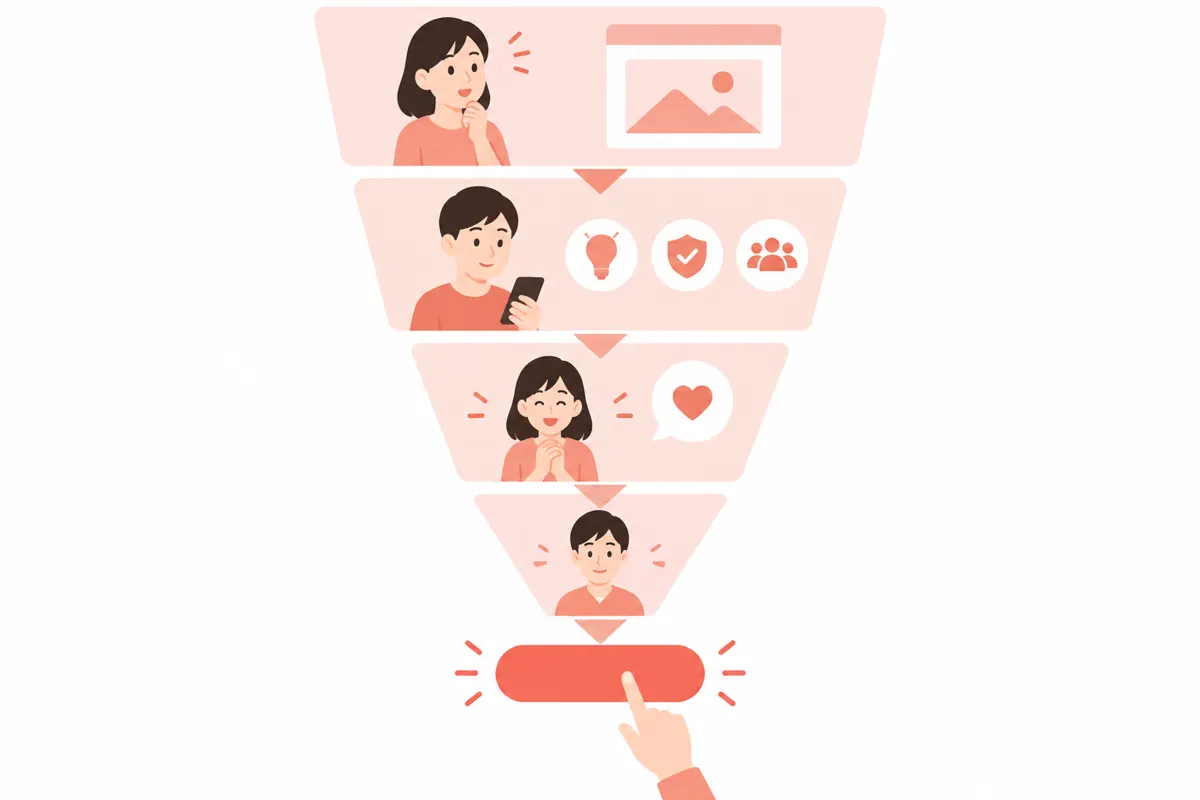
An LP lays out the following elements in line with how the reader's feelings progress.
- The first screen. A headline that makes clear who the page is for and what it is about, plus the central promise
- Empathy with their problem. A description of a situation the reader feels is about them
- The solution. How your product or service changes that problem
- Reasons to choose you. What sets you apart, shown with concrete facts
- Customer voices and results. Include only what is genuine
- Pricing and process. How much it costs and how it proceeds
- Frequently asked questions. Answer the worries people have before applying
- The application button. Place it partway through the page as well, not only at the end
Include only genuine customer voices and results. Posting invented testimonials or unfounded figures not only costs you trust, it may also break the law.
What the first screen of an LP decides
People who open an LP look at the first screen and decide within seconds whether to keep reading. That is why the first screen should include these three things.
- Who the page is for. Wording such as “For those struggling with ___” that makes readers realize it is about them
- What they gain. One concrete sentence on what changes if they apply
- The next action. The application button, or a line of text just before it
If these three match what the ad copy promised, readers can move on without hesitation. Write the headline in the words already in the reader's head, not in the words the company wants to say.
Steps for creating an LP
LP production proceeds in the following order.
- Decide on one target action. It should be an application, a purchase, or a request for materials
- Decide who the reader is. Write out who comes to this page and in what situation
- Collect the words those readers use. These are the terms they search for and the questions they ask in inquiries
- Create two or three angles. These are ideas about which problem to write for and which strength to communicate first
- Compare the angles and settle on one
- Write the copy. Create the headlines, body text, and button wording
- Create the design. Compare options with different layouts and uses of photos, then choose
- Check it on a smartphone and publish
- After launch, look at the numbers and revise the headlines and button wording
Steps 3 through 5 are what make or break an LP's results. An LP written in the words readers actually use keeps the ad copy and the page content aligned, so fewer people leave.

Improvements after launch change the results
At the moment it goes live, an LP is still a hypothesis. After launch, you look at what share of the people who saw the ad read the page, pressed the button, and went through with an application, then revise the headlines, button wording, and photo placement. Few LPs hit the mark on the first try. Building it on the assumption that you will look at the numbers and revise is the essence of LP production.
Common mistakes in LP production
Cramming several goals into one LP
If you ask for an application, a materials request, and an inquiry all at once, readers hesitate over which button to press. Narrow the target action to one and split the other actions onto separate pages.
The ad and the LP do not match
If the ad touts a “free trial” but the words “free trial” do not appear on the first screen of the LP, readers grow suspicious and leave. Align the ad copy and the first screen of the LP around the same promise.
Not checking it on a smartphone
Most people who arrive from ads view the page on a smartphone. Problems such as an application button that is too small or a form with too many fields cannot be spotted on a computer screen alone.
Publishing it and never looking at the numbers
Without looking at the numbers, you cannot tell where people are dropping off. Set a day each week to review them.
How LPs are used, by industry
The situations where an LP delivers results differ by industry.
For cram schools and lesson studios, an LP aimed at trial lesson sign-ups works well. Parents who arrive from an ad or a social media post read about what the classes are like, the fees, and how attendance works, then move on to the trial sign-up button.
For construction and housing-related companies, the goal is a free quote or a booking for a consultation event. Showing the construction process and how costs are determined eases the reader's worries.
For licensed professionals and consulting services, the goal is a first free consultation. Writing about one problem per LP, rather than listing every problem you handle, makes it easier for readers to feel it is about them.
For online retail, the goal is an order for a new product or a subscription. Show photos of the product in use, explanations of ingredients or materials, and the return policy.
For recruitment, the goal is an application. Lay out a typical day on the job, voices from current staff, and the hiring requirements, and place the apply button where it is easy to press.
Whatever the industry, one LP asks for one action. When you have multiple goals, create separate LPs and change the LP for each ad so that the ad's promise and the page content match.
How to think about the length of an LP
Longer is not necessarily better for an LP. What matters is that the information needed before applying matches how quickly the reader makes a decision.
For low-priced products or offers with little commitment (such as free materials requests), a shorter LP is enough. For expensive items or ones that take time to decide on (construction work, training, systems), more material for the decision is needed, so the page gets longer.
Even when the page is long, make sure the flow of the argument is clear from the headlines alone so readers do not drop off partway. Place the application button partway through the page as well.
What to prepare before placing an order
Having these four things ready before you commission an LP makes production move faster: the goal of the application and how many you want per month; the features and pricing of your product or service; data on genuine customer voices and results; and the photos you want to use or any existing ad copy. You can still talk to us if they are not all ready, but the more material there is, the better the copy and the shorter the production period.
Among these preparations, genuine customer voices matter most. Use only testimonials you have permission for, and if you plan to show names or ages, obtain the person's consent. If you have not yet collected any testimonials, we will decide together on a way to gather them after launch.
FAQ
If you want to collect applications from ads, create the LP first. If you want to make your company known and convey trust, create the website first. If you need both, you can also start with the LP and add the website later.
If there is only one target action, one page is enough. If the goal differs by product, create an LP for each product.
It varies with the content and volume. Because the range differs widely from one provider to another, check what they will handle and how far their work extends before you place an order.
You can aim to be found through search, but an LP is a format most often used as the destination for ads. If you want to attract visitors through search, combine it with a website and blog articles.
It depends on the production company. Before placing an order, check whether they have a setup for reviewing the numbers after launch and making revisions.
Talk to us about how to approach LP production
At Merci Ltd., we collect the words used by the people who apply, compare angles, create LPs while comparing design options, and keep revising based on ad figures after launch. You can also commission this together with online ad management.